

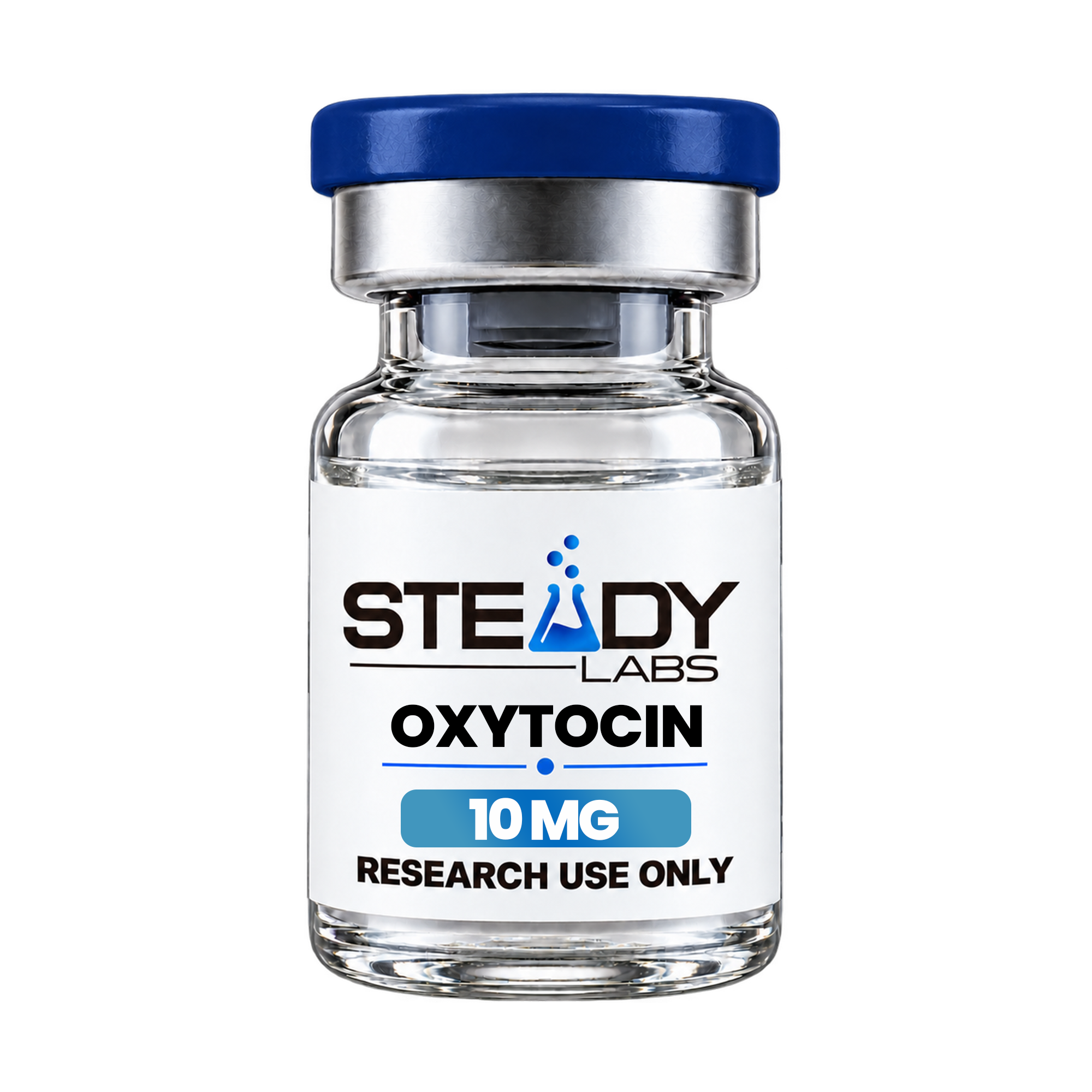
Oxytocin 10MG
Oxytocin is a nine-residue cyclic peptide supplied for controlled laboratory, analytical, and scientific research.
Its molecular structure contains an intramolecular disulfide bridge between the cysteine residues at positions 1 and 6 together with a C-terminal amidated glycine residue. These structural characteristics are integral to its chemical identity and should be preserved in technical and analytical documentation.
The parent peptide should be distinguished from Oxytocin Acetate and other salt or counter-ion forms, which may have different molecular formulas and molecular weights.
Research Applications
Oxytocin may be examined in controlled non-clinical research involving:
- Peptide identity and characterization
- Ligand-receptor interaction studies
- Molecular signaling research
- Cyclic peptide structure analysis
- Disulfide-bond characterization
- Analytical peptide comparison
- Stability assessment
- Non-clinical biochemical and cellular models
Experimental observations should remain specific to the applicable research model and should not be interpreted as evidence of reproductive, behavioral, hormonal, therapeutic, or clinical effectiveness.
Structural Information
Oxytocin is commonly represented as:
Cys-Tyr-Ile-Gln-Asn-Cys-Pro-Leu-Gly-NH₂
One-letter representation:
CYIQNCPLG-NH₂
Important structural characteristics include:
- Nine amino-acid residues
- Cys¹-Cys⁶ intramolecular disulfide bridge
- C-terminal amidation
- Cyclic peptide architecture created by the disulfide linkage
These features form part of the molecule’s complete analytical identity.
Analytical Identification
Relevant analytical characterization may include:
- Amino-acid sequence confirmation
- Molecular mass assessment
- Disulfide-bond verification
- C-terminal amidation confirmation
- Chromatographic purity testing
- Peptide identity verification
- Structural characterization
- Lot-specific quality analysis
If the supplied material is an acetate or another counter-ion form, final molecular specifications should match that exact preparation.
Specifications & Documentation
Lot-specific documentation should be reviewed for:
- Compound identity
- Amino-acid sequence
- Molecular formula
- Molecular weight
- Disulfide configuration
- Terminal modification
- Salt or counter-ion form
- Purity specification
- Analytical testing
- Lot or batch information
- Certificate of Analysis
- Storage requirements
Authenticated product-specific documentation should take precedence over generalized reference values.
Storage & Handling
Store according to the conditions specified on the product label and Certificate of Analysis. Protect the material from environmental conditions that could compromise peptide integrity.
Handling should follow established laboratory procedures appropriate for research peptide materials.
Research Use Only
Oxytocin is supplied exclusively for laboratory research, analytical testing, and scientific reference purposes.
Disclaimer
For research use only. Not for human or veterinary use. Not intended for consumption, administration, reproductive use, behavioral use, hormonal use, diagnosis, treatment, mitigation, cure, or prevention of any disease. No therapeutic, reproductive, behavioral, hormonal, medical, or clinical claims are made or implied. Product information is supplied solely for scientific identification, documentation, and research reference.
$ 60
Oxytocin is a nine-residue cyclic peptide supplied for controlled laboratory, analytical, and scientific research.
Its molecular structure contains an intramolecular disulfide bridge between the cysteine residues at positions 1 and 6 together with a C-terminal amidated glycine residue. These structural characteristics are integral to its chemical identity and should be preserved in technical and analytical documentation.
The parent peptide should be distinguished from Oxytocin Acetate and other salt or counter-ion forms, which may have different molecular formulas and molecular weights.
Research Applications
Oxytocin may be examined in controlled non-clinical research involving:
- Peptide identity and characterization
- Ligand-receptor interaction studies
- Molecular signaling research
- Cyclic peptide structure analysis
- Disulfide-bond characterization
- Analytical peptide comparison
- Stability assessment
- Non-clinical biochemical and cellular models
Experimental observations should remain specific to the applicable research model and should not be interpreted as evidence of reproductive, behavioral, hormonal, therapeutic, or clinical effectiveness.
Structural Information
Oxytocin is commonly represented as:
Cys-Tyr-Ile-Gln-Asn-Cys-Pro-Leu-Gly-NH₂
One-letter representation:
CYIQNCPLG-NH₂
Important structural characteristics include:
- Nine amino-acid residues
- Cys¹-Cys⁶ intramolecular disulfide bridge
- C-terminal amidation
- Cyclic peptide architecture created by the disulfide linkage
These features form part of the molecule’s complete analytical identity.
Analytical Identification
Relevant analytical characterization may include:
- Amino-acid sequence confirmation
- Molecular mass assessment
- Disulfide-bond verification
- C-terminal amidation confirmation
- Chromatographic purity testing
- Peptide identity verification
- Structural characterization
- Lot-specific quality analysis
If the supplied material is an acetate or another counter-ion form, final molecular specifications should match that exact preparation.
Specifications & Documentation
Lot-specific documentation should be reviewed for:
- Compound identity
- Amino-acid sequence
- Molecular formula
- Molecular weight
- Disulfide configuration
- Terminal modification
- Salt or counter-ion form
- Purity specification
- Analytical testing
- Lot or batch information
- Certificate of Analysis
- Storage requirements
Authenticated product-specific documentation should take precedence over generalized reference values.
Storage & Handling
Store according to the conditions specified on the product label and Certificate of Analysis. Protect the material from environmental conditions that could compromise peptide integrity.
Handling should follow established laboratory procedures appropriate for research peptide materials.
Research Use Only
Oxytocin is supplied exclusively for laboratory research, analytical testing, and scientific reference purposes.
Disclaimer
For research use only. Not for human or veterinary use. Not intended for consumption, administration, reproductive use, behavioral use, hormonal use, diagnosis, treatment, mitigation, cure, or prevention of any disease. No therapeutic, reproductive, behavioral, hormonal, medical, or clinical claims are made or implied. Product information is supplied solely for scientific identification, documentation, and research reference.
Be the first to review “Oxytocin 10MG” Cancel reply
Related Products
Related products
-
Uncategorized
Tirzepatide
$ 70 – $ 199Price range: $ 70 through $ 199 Select options This product has multiple variants. The options may be chosen on the product page
// FAQ's //
Current Offers on Selected Research Materials Materials
Review active pricing on selected Research Materials for Laboratory Use while product availability and promotional terms remain in effect.
No. All products are supplied exclusively for laboratory research. They are not intended for human or veterinary use, personal use, diagnostic procedures, or therapeutic applications.
Yes. Our checkout process uses secure technology to help protect your personal and payment information. Available payment methods may vary depending on your location and order details.
Relevant product pages may include recommended Storage Conditions and Handling Guidelines. Researchers remain responsible for using appropriate equipment, facilities, procedures, and internal laboratory controls.
Eligible customers may Order Research Compounds Online, subject to product availability, location restrictions, website terms, and any applicable order-verification requirements.
No. Steady labs does not provide patient consultations, medical advice, dosing guidance, treatment recommendations, or instructions for personal use.
Research grade describes material supplied for controlled laboratory investigation with relevant specifications or available analytical information. It does not indicate pharmaceutical approval, suitability for consumption, or authorization for clinical use.
Reviews
There are no reviews yet.